






By the JBR Battery team · Updated · 6 min read
The short answer
The cost of a car battery replacement in Dubai is decided by the battery's size and capacity, its technology (flooded, EFB or AGM), the brand tier and warranty length. It also depends on whether the car needs registration, how hard the battery is to reach, and whether it is fitted at a workshop or where the car is parked.
The factors that set the cost, at a glance
Seven things set the cost of a car battery replacement in Dubai: the battery's size and capacity, its technology, the brand tier, registration, access, the warranty, and how and when it is fitted. Two cars parked side by side in a JBR basement can get very different quotes for these reasons, and neither quote is wrong.
| Factor | Why it changes the cost | What to ask |
|---|---|---|
| Size and capacity (Ah, CCA) | A larger battery contains more lead and active material | Which size, Ah and CCA does my car need |
| Technology (flooded, EFB, AGM) | EFB and AGM cost more to make and cope with start-stop use | Is the quoted battery the same technology as the original |
| Brand tier | Premium ranges typically offer more cranking power and a longer design life | Which brand and which range is quoted |
| Registration or coding | It needs a diagnostic tool and extra time | Does my car need it, and is it included |
| Battery location | Boot and under-seat batteries take longer to reach | Is the extra labour included |
| Warranty length | Longer cover is built into the cost | How long is the warranty, and is it in writing |
| Fitting and timing | Mobile fitting includes the technician's travel, and some providers charge more late at night | Is the call-out included at this hour |
Battery size and capacity: Ah and CCA
A bigger battery costs more because it contains more material. Capacity is measured in amp-hours (Ah) and starting power in cold cranking amps (CCA). A small hatchback typically uses a battery of around 35 to 45 Ah, while a large SUV or a V8 pickup can need 90 Ah or more.
The case has to match as well. Many Japanese and Korean cars use JIS sizes such as 55D23L, and many European cars use DIN sizes such as H6 or H7. The terminals must sit on the correct side and the hold-down clamp must fit, so the size is fixed by the car and not by preference. CCA is not about cold mornings in Dubai, but it still tells you how much current the battery can deliver to the starter.
Technology: flooded, EFB or AGM
Technology is usually the biggest single step in cost. A conventional flooded battery is the entry tier, an EFB (enhanced flooded battery) sits in the middle, and an AGM (absorbent glass mat) battery sits in a higher tier.
AGM sits higher because of how it is built. The acid is held in glass-fibre mats between the plates, the case is sealed and valve-regulated, and the battery tolerates several times more charge and discharge cycles than a flooded one. A start-stop battery needs exactly that: the engine restarts at every traffic light on the way out of Dubai Marina, and the battery runs the AC fan and screens while the engine is off. Cars with start-stop leave the factory with EFB or AGM, and the replacement has to match. Fit AGM where AGM was fitted, and EFB or AGM where EFB was fitted.
Brand tier and warranty length
Brand and warranty move the cost within each technology. Most manufacturers sell several ranges, and the premium ranges typically offer higher CCA and a longer design life than the entry range in the same case size. Ask which brand and which range is quoted, because two batteries of the same size from the same maker can sit in different tiers.
Warranty length varies by brand and range, up to 24 months. Longer cover is built into the cost, so compare quotes on the same warranty. Ask for it in writing, with the fitting date and the car's plate number on it.
Registration, battery location and how it is fitted
Labour changes the cost when the car needs battery registration or the battery is hard to reach. Many BMW, Mini, Audi, Volkswagen and Land Rover models, and some others, need the new battery registered with a diagnostic tool so the charging system knows a new battery is fitted. If the capacity or technology changes, the car may need coding as well. Skip this step and the car can go on charging the new battery as if it were the old one, which shortens its life.
Location decides how long the job takes. A battery under the bonnet of a typical saloon is a quick job. One under the boot floor, under a seat or behind trim takes longer, and some cars carry a second auxiliary battery.
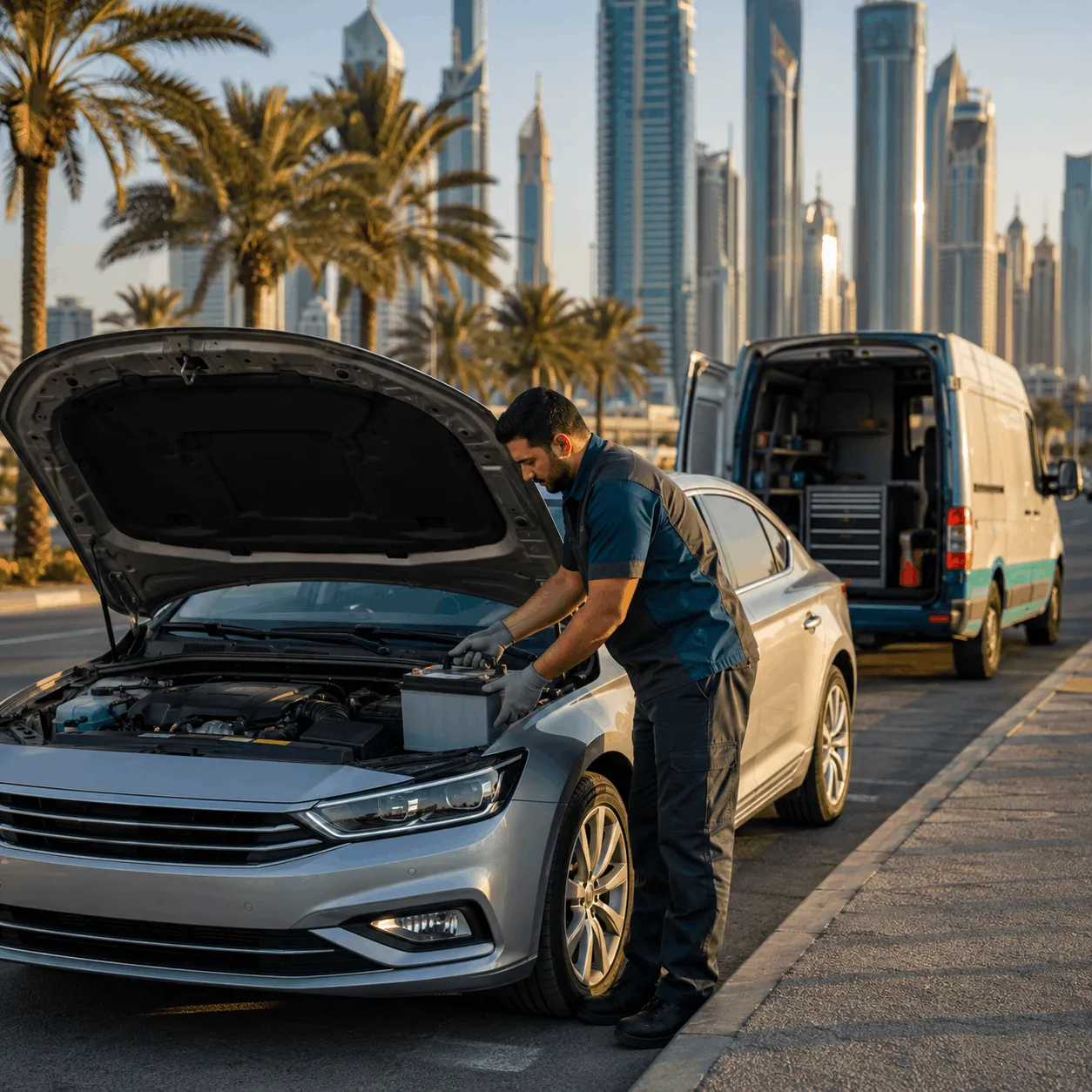
Mobile fitting and workshop fitting are different services. A mobile technician comes to the basement or the roadside, and the travel is part of the quote. A workshop visit means getting a car with a flat battery there first, by jump start or recovery truck, and that has its own cost. Time of day can matter too. Some providers add a call-out charge late at night or on public holidays, so ask before you confirm.
What a fair quote includes, and how to get an exact one
A fair quote is one all-in figure that covers the battery, the fitting and the checks around it. It should include:
- The battery itself, named by brand, range, size, Ah, CCA and technology.
- Fitting, including registration or coding if the car needs it.
- A test of the old battery before it is condemned, and of the charging system once the new one is in.
- Removal of the old battery for recycling.
- A written warranty.
To get an exact quote, send the car's make, model and year on WhatsApp. A photo of the label on the current battery helps, because it shows the size, Ah, CCA and technology in one picture. With that, the right battery can be identified and quoted before anyone drives out. Payment is by cash or card, and the cost can be split with Tabby or Tamara.
False economies that cost more later
The lowest quote often costs more over the life of the battery, because it usually saves money in one of three ways.
- An undersized battery. A lower Ah or CCA than the car was built for works harder on every start and fails sooner, especially in summer.
- The wrong technology. A flooded battery in a start-stop car is not built for the constant cycling. It typically fails early, and start-stop may stop working.
- Old stock. Batteries lose charge on the shelf, and faster in a hot store. One that has sat for a long time without a top-up charge has already aged.